The Legal Requirements for Suicide Scene Cleanup by State
October 20, 2025
Is Suicide Cleanup Covered by Homeowners Insurance?
December 12, 2025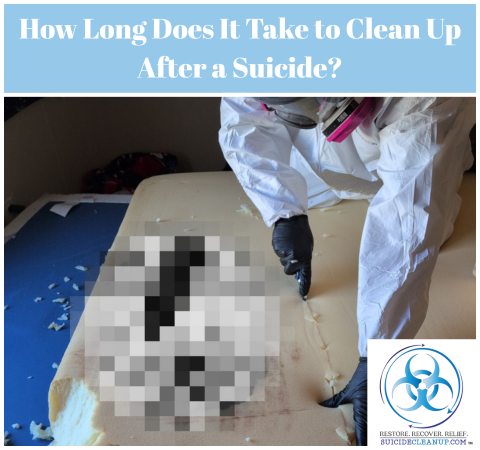
When a loved one dies by suicide, the emotional impact can be overwhelming. Amid grief, families often wonder: how long does cleanup take after suicide? This is more than just a practical question. It’s about safety, health, and returning the space to a livable condition. In this post, we’ll walk through the typical suicide cleanup timeline, what factors influence it, and what to expect when professionals handle the job.
1. Why the Timeline Varies
There’s no single answer for how long a suicide cleanup takes. The suicide cleanup timeline depends on several factors:
- Size of the affected area: A single room versus multiple rooms significantly changes the scope.
- Extent of contamination: The more blood or bodily fluids, and how much has seeped into porous materials like carpet or drywall, will increase time.
- Time before discovery: If the scene was not discovered immediately, decomposition or fluid migration can make cleanup more complex.
- Type of surfaces: Porous materials (mattress, fabric, wood) absorb more, while non-porous surfaces (tile, metal) clean more easily.
- Access and structural issues: Hard-to-reach places, damage to flooring or walls, or HVAC contamination that requires treatment.
- Odor concerns: If decomposition or other sources create odors, air purification (e.g., HEPA, hydroxyl machines) might be needed.
2. Typical Timeline for Suicide Scene Cleanup
Based on industry data, here’s a breakdown of what the suicide cleanup timeline often looks like:
| Scenario | Estimated Cleanup Time |
| Recent, small incident (one room) | 2–4 hours |
| Extended or undiscovered incident | 6–12+ hours, possibly more |
| Complex scenes (multi-room, structural) | 12–24+ hours, potentially requiring multiple visits |
| Unattended death or decomposition | 1–3 days, due to odor, deep cleaning, and possibly demolition/restoration |
Some biohazard companies report that suicide cleanup can take up to 24 hours or more in especially challenging situations. Others note that most cleanups finish in around 4–12 hours, depending on size and severity. Professional crime-scene cleanup services also estimate 6–12 hours for standard suicide or homicide scenes.
3. What Happens During Each Phase of the Cleanup
To understand where time is spent, here’s a step-by-step look at the typical process.
- Assessment & Safety Preparation (30–60 minutes)
Technicians arrive, evaluate the scene, identify hazards, and decide which areas need containment. PPE (personal protective equipment) and negative-air machines may be deployed. - Biohazard Removal (1–4 hours)
They remove blood, bodily fluids, and any contaminated items (carpets, furniture, drywall). Contaminated materials are collected and disposed of as medical waste per regulations. - Sanitization & Disinfection (1–3 hours)
All surfaces are treated with hospital-grade or EPA-approved disinfectants. In some cases, ATP testing is used to make sure biological contamination is eliminated. - Odor Removal & Air Purification (1–4+ hours)
If decomposition or other odors are present, technicians use hydroxyl machines, HEPA air scrubbers, or ozone treatments to neutralize smells and purify the air. - Restoration & Final Walk-Through (1–2 hours)
Once cleaning is done, a final inspection is done. The area may be tested to ensure it is safe to re-enter (especially if ATP or other testing was done). Then the cleanup team reports on what was done and may advise on any structural repairs.
4. Why Professionals Are Essential — and Why DIY Isn’t Enough
Trying to clean up a suicide scene on your own can be dangerous, emotionally traumatic, and legally risky. Here’s why working with a professional suicide cleanup company matters:
- Health & Safety Risks: Bodily fluids can harbor bloodborne pathogens (like HIV or Hepatitis). Professionals use proper PPE and protocols to protect themselves and others.
- Proper Disposal: Biohazardous waste must be handled and disposed of correctly under OSHA and local regulations.
- Thorough Decontamination: Trained teams ensure deep cleaning, even of porous materials, and use testing methods (like ATP) to confirm the area is safe.
- Odor Neutralization: Professionals use specialized equipment (hydroxyl generators, HEPA filters) to eliminate odors that linger.
- Documentation & Insurance Support: Many suicide remediation companies document their work carefully, which helps with insurance claims.
- Emotional Support & Discretion: These teams are trained not just in cleaning, but in providing compassionate, discreet service when families are grieving.
5. What to Expect When Working With SuicideCleanup.com
At SuicideCleanup.com, we understand how difficult this situation is. Here’s a realistic breakdown of what working with us might look like — and how we work to minimize disruption while prioritizing your safety.
- 24/7 Response: We’re available around the clock to begin assessment as soon as authorities release the scene.
- Transparent Estimate: After our initial evaluation, we provide a clear estimate of how long the cleanup will take (based on size, contamination, and accessibility).
- Certified Technicians: Our team follows OSHA, EPA, and industry best practices, using specialized PPE and containment.
- Compassionate Service: We operate with sensitivity and discretion, understanding the emotional weight of the moment.
- Full Remediation: Beyond just removal, we disinfect, deodorize, and, if necessary, coordinate any structural restoration.
- Clear Communication: We offer a final walk-through and, if needed, documentation for insurance or legal purposes.
6. Healing Begins With Restoration
Understanding the suicide cleanup timeline can help you regain a sense of control during a chaotic time. While the process may take anywhere from a few hours to a full day (or more in complex cases), professional teams are trained to work efficiently, safely, and respectfully.
If you’re facing this heartbreaking cleanup, you don’t have to do it alone. With the right help, the space can be restored — and the healing process can truly begin.
Conclusion: Getting the Help You Need, When You Need It Most
The aftermath of a suicide is emotionally overwhelming, and dealing with the physical cleanup on your own is never something you should have to face. Understanding how long suicide cleanup takes can help you prepare, but what matters most is ensuring the space is handled safely, discreetly, and with compassion. Professional trauma scene cleaners follow strict protocols to restore the environment, eliminate health risks, and give families one less burden during a devastating time.
If you need immediate help, SuicideCleanup.com is available 24/7. Our certified, compassionate technicians are ready to respond quickly, assess the situation, and restore your property with the care and respect you deserve.
Contact us today for fast, confidential assistance — we’re here to help you through every step of the cleanup and recovery process.