Cleaning After Death and Personal Belongings: What Can Be Saved and What Cannot
May 29, 2026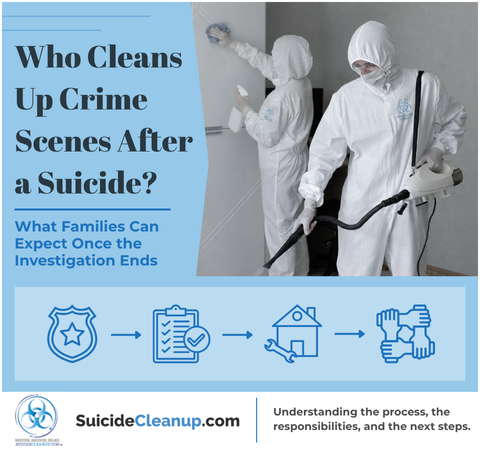
When a suicide occurs, families are often left facing questions they never imagined they would need to ask. One of the most common questions is who cleans up crime scenes after a suicide and what happens once investigators leave the property.
Many people assume law enforcement or emergency responders handle the cleanup process. In reality, their responsibilities end once the investigation is complete and the scene is officially released.
Professional biohazard remediation specialists perform the cleanup, restoration, and decontamination work that follows. If you need immediate assistance, our crime scene cleanup services are available 24/7 to help families restore affected properties safely, discreetly, and compassionately.
Who Cleans Up Crime Scenes After a Suicide?
Professional biohazard remediation specialists clean crime scenes after a suicide.
Once law enforcement completes its investigation and releases the property, trained technicians assess contamination, remove affected materials, disinfect impacted areas, and properly dispose of regulated waste.
This work goes far beyond ordinary cleaning. Blood, bodily fluids, and other biological materials require specialized handling procedures designed to protect future occupants and restore the environment safely.
According to OSHA’s Bloodborne Pathogens Standard, workers exposed to potentially infectious materials must follow specific safety procedures designed to reduce exposure risks.
Who Cleans Up Crime Scenes Once Police Release the Scene?
Cleanup cannot begin until investigators officially release the property.
People searching for who cleans up crime scenes are often surprised to learn that police officers do not perform remediation work after a suicide. Their role focuses on determining what occurred, gathering evidence, and documenting the scene.
Once those responsibilities are complete, the property owner, family, landlord, or other authorized party can arrange professional cleanup services.
Is a Suicide Considered a Crime Scene?
In many situations, yes.
Although suicide itself is not a crime, investigators must determine the cause and manner of death before ruling out other possibilities. As a result, the area is often treated as a crime scene during the investigation.
Our guide explaining whether suicide is considered a crime scene provides a more detailed look at why this process occurs and what families should expect.
What Happens After the Investigation Ends?
The first step is assessing the extent of contamination.
Even when contamination appears limited, biological materials can spread beyond what is immediately visible. Flooring, furniture, mattresses, subfloors, and other porous materials may be affected.
A typical cleanup process includes:
- Scene release by law enforcement
- Site assessment
- Contamination mapping
- Removal of affected materials
- Cleaning and disinfection
- Biohazard waste disposal
- Odor remediation when needed
- Final inspection
Every situation is different. A localized incident may require limited remediation, while a delayed discovery may require significantly more restoration work.
What Do Crime Scene Cleanup Professionals Actually Do?
Crime scene cleanup focuses on restoring the property to a safe condition.
The goal is not simply to make the area look clean. The goal is to identify, remove, and remediate contamination that could create future health concerns.
Assessment and Hazard Identification
Technicians determine:
- Which materials have been affected
- How far contamination has spread
- Which belongings may be restored
- Which materials require removal
This assessment helps establish the safest remediation plan.
Removal of Affected Materials
Some materials can be restored. Others cannot.
Depending on the circumstances, remediation may involve removing:
- Carpet and padding
- Mattresses
- Upholstered furniture
- Drywall
- Bedding
- Personal belongings
Removing affected materials helps eliminate contamination that cannot be safely cleaned.
Cleaning and Disinfection
After contaminated materials are removed, technicians clean and disinfect impacted surfaces using approved products and established remediation procedures.
The CDC recommends prompt cleaning and disinfection of blood and bodily fluid contamination to reduce exposure risks.
Proper Biohazard Waste Disposal
Regulated waste requires special handling.
Materials removed during remediation must be packaged, transported, and disposed of according to applicable regulations. This process helps protect waste handlers, sanitation workers, and the public.
Why Families Are Advised Not to Handle Crime Scene Cleanup Themselves
Many families initially consider handling the cleanup on their own.
While understandable, doing so can create both safety concerns and emotional challenges.
Hidden Contamination Can Extend Beyond Visible Areas
What you can see is not always the full extent of the contamination.
Fluids can migrate into:
- Carpet fibers
- Padding
- Subfloors
- Furniture cushions
- Wall cavities
A surface that appears clean may still contain contamination beneath it.
The Emotional Impact Can Be Significant
Many people underestimate the emotional toll associated with cleaning the scene of a loved one’s death.
Professional remediation allows families to focus on supporting one another rather than confronting the physical details of the scene.
Delays Can Make Cleanup More Difficult
Prompt remediation helps reduce odor issues, contamination spread, and property damage.
Our article on why fast suicide cleanup is critical explains how delays can affect restoration efforts.
What Happens to Personal Belongings?
Not every item needs to be discarded.
Whether an item can be restored depends on the type of material involved and the level of contamination present.
Items Often Eligible for Restoration
Depending on the circumstances, items may include:
- Documents
- Photographs
- Decorative items
- Electronics
- Hard-surface furniture
Items That May Require Removal
Some porous materials are difficult or impossible to decontaminate safely.
Examples may include:
- Mattresses
- Pillows
- Upholstered furniture
- Carpet padding
- Heavily contaminated clothing
Our guide on cleaning after death and personal belongings explains this process in greater detail.
Who Pays for Crime Scene Cleanup?
Insurance often helps cover remediation costs, but coverage varies.
Many homeowners, renters, and commercial property insurance policies include provisions related to biohazard cleanup and restoration.
Common Payment Sources
| Source | May Cover Cleanup? | Notes |
| Homeowners Insurance | Often | Depends on policy |
| Renters Insurance | Sometimes | Varies by carrier |
| Commercial Property Insurance | Often | Depends on coverage |
| Crime Victim Assistance Programs | Sometimes | State-specific |
| Self-Pay | Yes | When coverage is unavailable |
For additional information, visit our guide on death cleanup insurance coverage.
How Long Does Crime Scene Cleanup Take?
The answer depends on the extent of contamination.
Some projects can be completed in a single day. Others may require multiple days when contamination affects structural materials or large portions of the property.
Factors that influence timelines include:
- Size of the affected area
- Amount of contamination
- Materials involved
- Need for demolition
- Odor remediation requirements
What Qualifications Should Crime Scene Cleanup Professionals Have?
Not every cleaning company has the training necessary to remediate a suicide scene safely.
When evaluating providers, look for experience involving:
- Bloodborne pathogen safety procedures
- Biohazard remediation
- Regulated waste handling
- Decomposition cleanup
- Suicide scene remediation
Our article on choosing the right suicide cleanup company highlights important warning signs families should know before hiring a provider.
What Families Can Expect During the Cleanup Process
Families often want to know what the experience will actually look like once cleanup begins.
Most projects involve:
- A confidential assessment
- Clear communication
- Respectful handling of personal belongings
- Removal of contaminated materials
- Thorough cleaning and disinfection
- Insurance documentation when needed
The goal is to remove uncertainty and help families begin moving forward.
Frequently Asked Questions
Who cleans up crime scenes after a suicide?
Professional biohazard remediation specialists clean crime scenes after a suicide. They remove contaminated materials, disinfect affected areas, and properly dispose of regulated waste.
Do police clean crime scenes after a suicide?
No. Police officers investigate and document the incident. Once the property is released, professional cleanup specialists perform the remediation work.
Is suicide cleanup covered by insurance?
Many homeowners, renters, and commercial property insurance policies may provide coverage for remediation services. Coverage varies by policy.
Can personal belongings be saved after a suicide?
Some belongings can often be restored depending on contamination levels and material type. Each item must be evaluated individually.
Is it safe to clean a suicide scene yourself?
Professional remediation is generally recommended because biological contamination may extend beyond visible surfaces and require specialized cleaning procedures.
Key Takeaways
When families ask who cleans up crime scenes after a suicide, the answer is trained biohazard remediation specialists who restore the property after law enforcement completes its investigation.
Understanding who cleans up crime scenes helps families prepare for the practical steps that follow a traumatic loss. From assessing contamination and evaluating belongings to handling waste disposal and insurance documentation, professional remediation helps reduce stress during an already difficult time.
If you need immediate assistance or have questions about the cleanup process, contact Suicide Cleanup through our contact page.